EN
EN



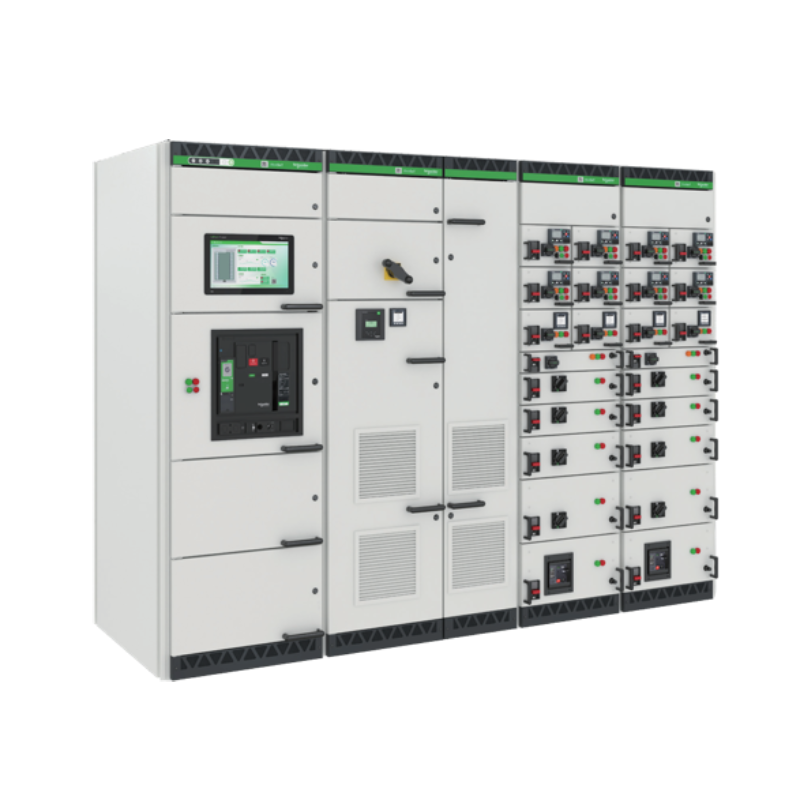
Understanding Low Voltage Panel Testing Fundamentals
Definition and Scope of Low Voltage Panel Performance Testing
Testing low voltage panels looks at how well they perform by checking things like whether the insulation holds up, if circuits stay connected properly, and if safety devices work correctly for systems running under 1,000 volts AC or 1,500 volts DC. These tests happen during different stages including when equipment leaves the factory (called FATs), right before putting it into service, and throughout regular operations just to make sure everything matches what was designed. A recent study from NETA back in 2022 found that around 8 out of 10 problems with industrial electricity actually come down to these panels either never being tested or set up wrong. That makes good reason why proper testing matters so much in real world applications.
Key Objectives: Safety, Reliability, and Compliance With IEC 61439 Standards
These evaluations are guided by three core objectives:
- Safety: Detecting arc flash risks and insulation degradation before energization
- Reliability: Ensuring consistent power delivery under full-rated load conditions
- Compliance: Adhering to IEC 61439 standards for mechanical durability and temperature rise (°70°C for copper conductors at full load)
Thermal imaging and partial discharge measurements are increasingly adopted by industry leaders to simultaneously meet these goals.
Role of Periodic Maintenance in Ensuring Long-Term Performance of Low Voltage Panels
IEEE 2023 data shows scheduled maintenance reduces failure risk by 62%. Key practices include annual torque verification of busbar connections using calibrated tools and infrared inspections to identify overheating terminals. Facilities that follow 5-year lifecycle replacement programs for circuit breakers experience 40% fewer unplanned outages than those relying on reactive repairs.
Pre-Testing Procedures and Safety Verification for Low Voltage Panels
Visual inspection and final checks before energizing the system
Conduct a comprehensive visual assessment of the low voltage panel, confirming:
- Absence of dust or debris in busbar compartments (maintaining ≥ 0.2 mm clearance per scheduled safety inspections)
- Terminal torque markings align with manufacturer specifications (±5% tolerance)
- Warning labels and arc flash boundaries are clearly posted in accordance with NFPA 70E
Verification of circuit breaker settings during installation
Use calibrated equipment to verify:
- Instantaneous pickup values match coordination studies (typically 800–1200% of rated current)
- Long-delay settings correspond to downstream conductor ampacity as defined in NEC 240.4(D)
Incorrect breaker configurations during commissioning account for 34% of panel failures, according to a 2023 study.
Ensuring continuity and integrity of protective circuits
Test protective conductor continuity using a 50Hz AC source, ensuring resistance does not exceed 0.1Ω per IEC 61439-1. Validate the following:
- Ground fault protection activates within 0.5–1.5 seconds, limiting touch voltage to ≤30V
- Panel doors exhibit less than 5mA leakage current during 1000V DC insulation tests
- Bonding jumpers have ≤0.01Ω resistance across joints
| Test Parameter | Pass Criteria | Measurement Tool |
|---|---|---|
| Insulation Resistance | ≥ 1MΩ at 500V DC | Megohmmeter |
| Circuit Continuity | ≤ 0.5Ω | Micro-ohmmeter |
| Circuit Breaker Timing | ±10% of setting | Primary injection kit |
Core Electrical Tests for Evaluating Low Voltage Circuit Breaker Performance
Effective evaluation of low voltage circuit breakers requires three critical assessments that ensure compliance with IEC 61439 standards while prioritizing operational safety and system longevity.
Insulation Resistance and Dielectric Strength Testing in Low Voltage Panels
Insulation resistance testing uses megohmmeters to assess dielectric integrity by measuring leakage currents. Dielectric strength testing applies up to 3.5 kV to uncover weaknesses in insulation before service. This dual approach is recommended to meet minimum insulation thresholds under extreme environmental conditions and ensure long-term reliability.
Functional Testing Under Simulated Fault Conditions
Simulating overloads and short circuits by injecting currents exceeding 300% of rated capacity verifies the breaker’s instantaneous tripping response, typically under 50 milliseconds in critical scenarios. These tests also reveal potential arcing or contact welding under stress, providing insight into real-world fault-handling performance.
Trip Unit Calibration and Response Time Accuracy Assessment
Calibrating electromechanical or digital trip units ensures proper coordination across protective devices. Primary injection testing validates settings with ±3% accuracy relative to manufacturer specifications. Accurate calibration prevents nuisance trips while guaranteeing fault clearance within 0.5 cycles during severe overloads.
Load-Based Performance Evaluation: Voltage Drop and Power Quality Testing
Importance of Load During Electrical Testing for Realistic Performance Evaluation
Applying actual operating loads is essential for identifying voltage irregularities and power quality issues. Unlike no-load inspections, load-based testing exposes weaknesses in connections, conductor sizing, and device coordination. Panels tested at 75–100% of rated capacity demonstrate a 40% higher fault detection rate (Power Quality Analysis Report, 2023).
Measuring Voltage Drop in Low Voltage Panels Under Operational Load
To accurately measure voltage drop, apply the panel’s maximum design load and use a calibrated true RMS digital voltmeter at key locations. As outlined in industry guidelines, testing should include both steady-state and peak transient conditions to capture worst-case performance. For 400V systems, common measurement points are:
| Measurement Location | Acceptable Drop | Tool Required |
|---|---|---|
| Main Busbar | ≤1% | True RMS DVM |
| Branch Circuit | ≤3% | Clamp Meter |
Acceptable Voltage Drop Limits According to IEC 60364-6 Guidelines
IEC 60364-6 specifies voltage drops must not exceed 3% from source to final distribution point, with a total limit of 5% across the installation. Exceeding these limits often indicates undersized conductors, loose terminations, or phase imbalance—factors linked to 22% of industrial panel failures (Energy Efficiency Review, 2024).
Case Study: Diagnosing Excessive Voltage Drop in an Industrial Low Voltage Panel
An industrial facility reported an 8.2% voltage drop in a 250A feeder circuit during production. Following predictive maintenance protocols, technicians identified oxidized busbar joints and an undersized neutral conductor. Corrective actions—retermination using infrared guidance and conductor upsizing—reduced the drop to 2.1% and improved energy efficiency by 9%.
Digital Tools and Preventive Maintenance Strategies for Low Voltage Panels
Essential Digital Tools: Multimeters, Clamp Meters, Megohmmeters, and Power Quality Analyzers
Modern diagnostics rely on precision instruments: digital multimeters offer ±0.5% accuracy in voltage and current measurements; clamp meters enable non-intrusive load balancing; megohmmeters verify insulation resistance above 1 MΩ, meeting IEC 61439 requirements; and power quality analyzers detect harmonics and transients that can reduce panel efficiency by up to 15% in industrial environments.
Smart Sensors and IoT Integration in Predictive Maintenance of Low Voltage Switchgear
IoT-enabled thermal sensors and current monitors deliver real-time data on contact temperatures and load profiles. A 2025 study found such systems reduce unplanned outages by 40% through early detection of abnormal heating. Cloud platforms analyze historical trends to predict circuit breaker wear, allowing interventions during planned downtime instead of emergency repairs.
Developing a Lifecycle Management Plan for Reliable Low Voltage Panel Operation
An effective lifecycle strategy integrates commissioning data, maintenance records, and manufacturer recommendations. A proven three-phase model includes:
- Baseline testing at commissioning
- Quarterly infrared inspections
- Annual dielectric strength validation
Facilities using preventive maintenance software automate work orders and track component aging, reducing labor costs by 28% compared to manual tracking. When integrated with power monitoring systems, this approach aligns maintenance with actual equipment stress rather than fixed intervals.
Frequently Asked Questions (FAQ)
What is low voltage panel testing?
Low voltage panel testing involves evaluating panels operating under 1,000 volts AC or 1,500 volts DC to ensure their performance, safety, and compliance with standards.
Why are low voltage panel tests important?
Testing is crucial because nearly 80% of industrial electricity problems stem from untested or improperly set-up panels. Proper testing ensures safety, reliability, and compliance with necessary standards.
What standards guide low voltage panel testing?
Testing is guided by IEC 61439 standards, focusing on safety, reliability, and mechanical durability.
How does periodic maintenance impact panel performance?
Scheduled maintenance can reduce failure risk by 62% and help prevent unplanned outages by following set procedures, including inspections and lifecycle replacement programs.
Table of Contents
- Understanding Low Voltage Panel Testing Fundamentals
- Pre-Testing Procedures and Safety Verification for Low Voltage Panels
- Core Electrical Tests for Evaluating Low Voltage Circuit Breaker Performance
- Load-Based Performance Evaluation: Voltage Drop and Power Quality Testing
- Digital Tools and Preventive Maintenance Strategies for Low Voltage Panels
- Frequently Asked Questions (FAQ)